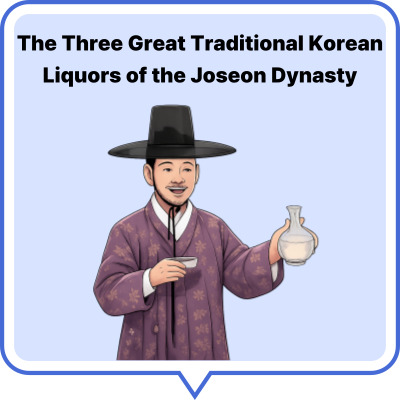
Exploring the heritage of The Three Great Traditional Korean Liquors reveals the sophisticated drinking culture of the Joseon Dynasty. As a sommelier specializing in K-Sool, I invite you to delve into these historical spirits that define Korean craftsmanship and medicinal wisdom.
Table of Contents
- 1. The Alcohol Culture of the Joseon Dynasty
- 2. Defining the Three Great Liquors: Choe Nam-seon’s Legacy
- 3. Gamhongno: The Crimson Sweet Dew
- 4. Leegangju: The Golden Harmony of Pear and Ginger
- 5. A Deep Appreciation for Juknyeokgo: The Bamboo Masterpiece
- 6. Master Song Myeong-seop: Preserving the Legacy of Juknyeokgo
1. The Alcohol Culture of the Joseon Dynasty
During the Joseon Dynasty (1392–1910), alcohol was far more than just a beverage; it was a medium for ritual, hospitality, and medicine. Households developed their own unique recipes, known as Gahwayangju, where the quality of water and local grains determined the prestige of the brew. The Joseon elite valued spirits that offered clarity of mind, leading to the development of medicinal spirits infused with herbs and saps. For more context, you can explore the The History of Korean Traditional Alcohol: From Past to Present.
The History of Korean Traditional Alcohol: From Past to Present
The story of Korean traditional alcohol is a reflection of the nation's turbulent yet resilient history. For thousands of years, brewing was an essential part of daily life, integrated into seasonal rites, ancestor worship, and hospitality. From the sophis
koreasoolguide.com
2. Defining the Three Great Liquors: Choi Nam-seon’s Legacy
The concept of the Three Great Traditional Korean Liquors is attributed to Choi Nam-seon in his work, Joseon Sangsik Mundap(Q&A on Joseon Common Sense). He identified the finest spirits of the land based on historical significance and unique production methods. While lists vary, the consensus points to Gamhongro, Leegangju, and Jukryeokgo as the pinnacle of Joseon distillation.
3. Gamhongro: The Crimson Sweet Dew
Gamhongro translates to "Sweet Crimson Dew." It is legendary for its vibrant reddish hue and its mention in classic Korean literature such as the Tale of Chunhyang and the Tale of the Rabbit.
History and Origin
Originating in the Pyongyang region, Gamhongro was often reserved for royalty and high-ranking officials. It was famously known as the favorite drink of the legendary Korean scholar Hwang Jini.
Manufacturing Process
The base spirit is distilled from rice and millet. However, the true secret lies in the double distillation process where the spirit passes through medicinal ingredients including:
- Longan: Provides a subtle sweetness.
- Cinnamon and Cloves: Adds warmth and spice.
- Gromwell Root: Gives the liquor its signature crimson color.
Characteristics
Despite its high alcohol content (usually around 40%), it is remarkably smooth. The cooling effect of the herbs balances the heat of the alcohol, creating a complex flavor profile that lingers on the palate.
4. Leegangju: The Golden Harmony of Pear and Ginger
Leegangju is a medicinal spirit that represents the Jeolla and Hwanghae provinces. Its name is derived from its two primary ingredients: "Lee" (Pear) and "Gang" (Ginger).
| Feature | Description |
|---|---|
| Main Ingredients | Rice, Pear, Ginger, Turmeric, Cinnamon, Honey |
| Flavor Profile | Sweet, spicy, and refreshing with a clean finish |
| Historical Use | Commonly used to treat digestive issues and as a high-end social drink |
The production of Leegangju involves aging the distilled spirit with crushed pears and ginger juice for several months. The addition of turmeric (Ulgum) not only contributes to its pale yellow color but also serves as a liver protector, reflecting the Joseon philosophy of "Yakju" (alcohol as medicine).
5. A Deep Appreciation for Jukryeokgo: The Bamboo Masterpiece
Among the Three Great Liquors, Jukryeokgo stands out to me on a completely different level. While each spirit carries its own historical and technical significance, Jukryeokgo offers a level of clarity, depth, and elegance that is difficult to replicate. Its clean bamboo aroma and layered medicinal character align perfectly with what I personally seek in a traditional distilled spirit.
This appreciation led me beyond simple tasting. I visited Taein Brewery in Jeongeup to better understand the craft behind this remarkable liquor. There, I had the opportunity to observe the philosophy and dedication required to produce authentic Jukryeokgo—an experience that reinforced why this spirit holds such a special place for me.
6. Grand Master Song Myeong-seop: Preserving the Legacy of Jukryeokgo
At the center of this tradition is Song Myeong-seop, a master brewer widely recognized for his commitment to preserving and refining Korea’s traditional distillation techniques. Based at Taein Brewery, he is known for faithfully maintaining the complex and labor-intensive process required to produce Jukryeokgo.
Extracting bamboo sap (Jukryeok) alone requires days of controlled heating, and integrating it into the distillation process demands both technical precision and deep experiential knowledge. What distinguishes his work is not just adherence to tradition, but interpretation. Rather than simplifying the process for scalability, he preserves the original intent of Jukryeokgo as a medicinal and philosophical spirit—one that emphasizes purity, balance, and refinement over mass appeal. Through artisans like Song Myeong-seop, Jukryeokgo continues to exist as a living tradition.
❓ Why is Jukryeokgo so rare?
Because extracting the bamboo sap is extremely labor-intensive, requiring days of heating bamboo stalks to collect a tiny amount of liquid.
❓ Can I visit Taein Brewery?
Taein Brewery in Jeongeup is a historical site where Master Song Myeong-seop produces Jukryeokgo and his famous additive-free Makgeolli.
❓ Why were these liquors called "Medicinal Spirits"?
In Joseon culture, spirits infused with ingredients like ginger, pear, and bamboo were believed to have healing properties, leading to the term "Yakju" or medicinal wine.
❓ Can I buy these liquors internationally?
While availability is limited, some premium retailers and specialty export sites now carry Leegangju and Gamhongno for international enthusiasts.
Conclusion
The Three Great Traditional Korean Liquors—Gamhongro, Leegangju, and Jukryeokgo—are liquid embodiments of Joseon history. While each offers a unique sensory experience, the elegance of Jukryeokgo and the dedication of masters like Song Myeong-seop remind us of the profound depth of Korean distilling heritage. For more information on premium tastings, check out The Sool Gallery in Bukchon, Seoul.
'culture' 카테고리의 다른 글
| What is Gayangju? Korea’s Forgotten Home Brewing Tradition (0) | 2026.04.27 |
|---|---|
| How Koreans Used Alcohol to Share Joy and Sorrow (0) | 2026.04.20 |
| Soju Brands Featured in Itaewon Class Explained (0) | 2026.04.16 |
| Korean Alcohol Seen in Squid Game: What Are They Drinking? (0) | 2026.04.15 |
| The History of Korean Traditional Alcohol: From Past to Present (0) | 2026.04.12 |


